How to Build a Sales Funnel When Your Brand Leads With Values
The word "funnel" makes a lot of conscious founders uncomfortable.
Here's why that reaction makes sense, and why you need one anyway.
If the word "funnel" makes you think of countdown timers, fake scarcity and high-pressure email sequences, you're not wrong to be suspicious. A lot of funnel advice is built on manipulation tactics that have no place in an ethical, values-led brand.
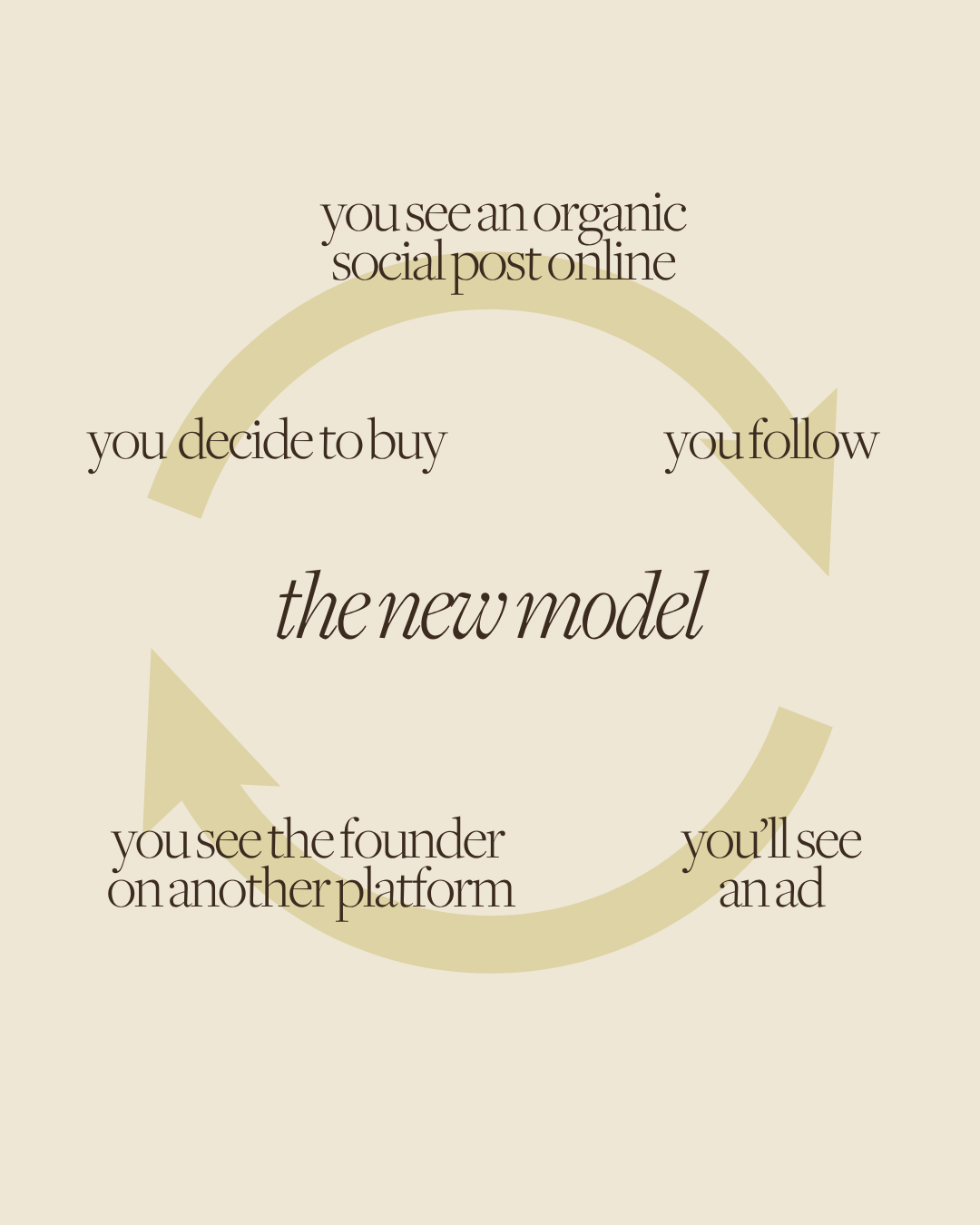
But here's what gets lost in that reaction: a funnel isn't a manipulation tool. It's just a description of how someone moves from not knowing you exist to deciding to work with you or buy from you. That journey happens whether you design it or not. The question is whether it's intentional and clear, or whether you're leaving people to figure it out themselves and losing them along the way. The old version of the traditional funnel is outdated, the new system is more streamlined and thinks about the attention spans of the current user, not the one from 10 years ago.
For values-led brands, an intentional funnel isn't a compromise. It's actually more aligned with your values than the alternative, because it means you're being clear about who you are, what you offer, and how to take the next step, rather than making your ideal clients work to find that out.
Why values-led founders resist funnels
The resistance usually comes from one of a few places.
"It feels manipulative."
This is the most common one, and it makes sense given how funnels are often taught. But manipulation is a choice about tactics, not a property of the funnel itself. A funnel built around honest content, genuine value and a clear offer is the opposite of manipulative, it respects your audience's time by making the path obvious.
"My audience doesn't want to be sold to."
No audience does. But your audience does want to find solutions to real problems. If what you offer is genuinely useful to them, making it easier to find and understand isn't selling, it's serving.
"I don't want to reduce my brand to a formula."
You don't have to. A funnel is a structure, not a script. The voice, the depth, the warmth — all of that is still yours.
What a values-aligned funnel actually looks like
The anatomy is simple. Someone discovers you. They start to understand what you do and whether it's relevant to them. They build enough trust to take action. That's it. What fills each stage is where your values come in.
Discovery: how people find you
For most purpose-led brands, the best discovery channels are the ones that feel natural: search (which is why the content you're creating matters), social media that genuinely reflects your voice, and word of mouth from clients who trust you. Paid ads can work, but they're rarely where to start and for many values-led founders, they're not where to start at all.
The question at this stage isn't "how do I reach more people" but "am I easy to find by the right people?" That's an SEO and clarity question as much as a volume question.
Consideration: helping people understand if you're right for them
This is the most overlooked stage for small brands. Someone has found you. They're on your website. Now what? If your site doesn't clearly communicate who you work with, what you do together, and what the outcome looks like, you'll lose them here regardless of how good your work is.
This stage is served by: clear service descriptions, honest about who they're for and who they're not for. A strong About page that gives people a sense of who you are. Testimonials or case studies that reflect the kind of clients and outcomes you want more of. And content, blog posts, social content, that demonstrates how you think.
The goal isn't to convince everyone. It's to help the right people self-select in, and the wrong people self-select out. That distinction matters enormously for values-led brands, because working with misaligned clients is a cost you feel.
Decision: making it easy to take the next step
This is where most small brands quietly lose people. The work looks great. The vibe is right. And then... there's no obvious next step. Or the next step is unclear, or buried, or requires more effort than the person is ready to give at that moment.
Your CTA (whatever it is) should be singular, clear and consistent. Whether it's a discovery call, an inquiry form or a specific service page, make sure it appears at the end of every piece of content, every service description, every about page section. Not aggressively. Just clearly.
One CTA. One direction. Repeated consistently.
The bits that can still feel off (and how to handle them)
Email Sequences.
These have a bad reputation because most of them are either spam or thinly veiled pressure campaigns. But an email sequence for a values-led brand can simply be a series of genuinely useful, human emails that help someone understand who you are and what you do. No urgency tricks required. The test: would you be comfortable if every person on your list could see every email? If yes, it's probably fine.
Urgency.
Real scarcity, you only take on a certain number of clients, a cohort closes on a particular date, is legitimate and worth communicating clearly. Manufactured urgency is not. Your audience will tell the difference.
Pricing.
One of the most values-aligned things you can do in your funnel is be clear about what things cost, or at least give people a sense of the investment level before they book a call. It saves everyone time and it signals confidence. Hiding your pricing until the last possible moment creates anxiety, not mystery.
A practical starting point
If you're looking at this and thinking your funnel needs work, start at the consideration stage. Go to your website right now and ask: if someone landed on my homepage for the first time today, having never heard of me, would they understand within 30 seconds who I help and what I do? Would they know where to go next?
If the answer is no, or maybe, that's your first fix. Everything else: the content, the emails, the ads, flows more effectively once the foundation is clear.
The bigger picture
A values-led funnel isn't really different from any other well-built funnel. It's clear, honest and built around what your audience actually needs to understand before they're ready to take action. The difference is that you're not willing to shortcut that process with manipulation, and that's not a constraint. It's a competitive advantage.
The brands your audience trusts the most aren't the ones that tricked them into buying. They're the ones that made it easy to say yes when the time was right.
If your website and funnel aren't converting the way they should, Roots to Results is designed to fix exactly that, starting with how your customers actually move, not how you wish they would.
That's what ethical marketing actually looks like in practice. Not a set of rules, a true way of operating.