Brand Strategy for Sussex Businesses: Why Local Positioning Still Matters
There's a tendency, especially since the pandemic normalised fully remote work, to think of local positioning as old-fashioned.
Why say you're based in Sussex when you can work with anyone, anywhere?
It's a reasonable question. But for most independent and service-based businesses, local positioning is still doing important commercial work, and ignoring it leaves visibility on the table that's surprisingly easy to claim.
Why local still converts
When someone searches for a "brand strategist" or "marketing consultant," they're making a very general query that Google interprets broadly. The results are dominated by large agencies with years of domain authority.
When someone searches for "brand strategist Sussex" or "brand consultant East Sussex," the field narrows dramatically. There are very few businesses specifically optimised for those terms, which means a focused local page can reach the first page of results far faster than a generic one.
More importantly: clients who are searching with a location in mind are often more motivated buyers. They want someone local for a reason, they value the ability to meet in person, they want to support a Sussex business, or they have local market knowledge on their mind. That intent converts.
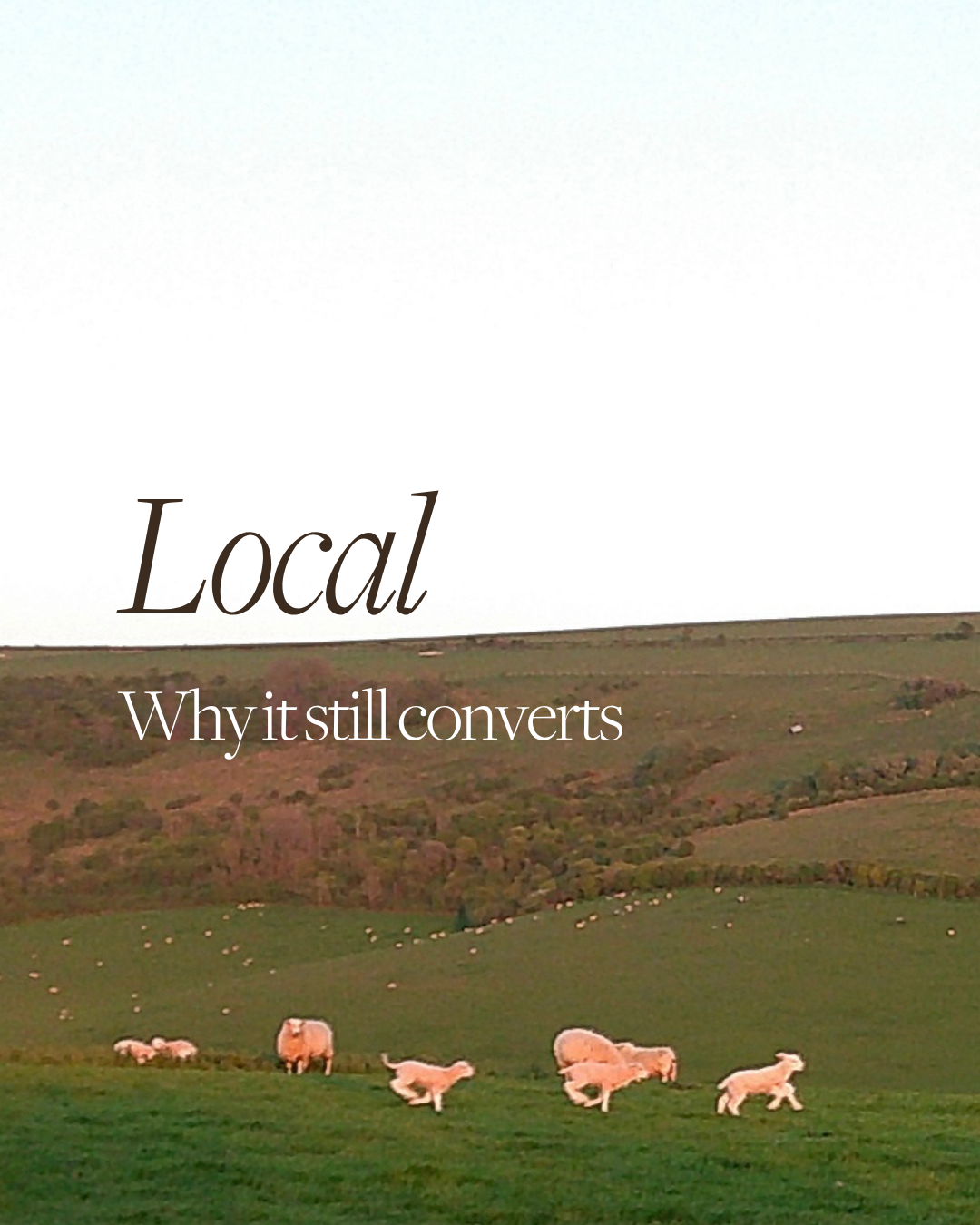
Sussex is underserved compared to Brighton
Brighton has a healthy creative and agency scene. Sussex as a whole: Lewes, Eastbourne, Hastings, Worthing, Horsham, Chichester, has far less dedicated coverage from brand and marketing professionals. If you're based in Brighton and willing to work across the county (which most consultants are), positioning yourself for Sussex as a region opens up a geographically wider audience with significantly lower competition.
The same principle applies slightly differently to East Sussex and West Sussex, which capture slightly different business communities and slightly different search behaviour.
What local positioning looks like in practice
It doesn't require a separate website or a dramatic change to your brand. It usually means:
A dedicated page that uses Sussex and the specific towns or areas you serve naturally throughout the copy, not keyword-stuffed, but present. This page becomes the landing point for location-based searches.
Google Business Profile
This powers local pack results, the map-based results that appear for local service searches and is often how mobile searches in particular convert.
Consistent addresses
Signals across your site, GBP, LinkedIn, and any directories. Search engines build a picture of where a business is from every signal available. Consistency strengthens it.
Content that references local context
Blog posts, case studies, or off-hand references to the local business community all contribute to the picture search engines build of your geographic relevance.
It doesn't limit you
The most common objection to local positioning is that it will make you seem small or restrict the clients you can attract nationally.
It doesn't. Being clearly based somewhere is a trust signal, not a limitation. The LocalBusiness schema on your site, combined with national-facing copy on your main service pages, lets you have both: strong local visibility and clear positioning for UK-wide clients.
The businesses that benefit most from local positioning are exactly the kind Pho Marketing Collective works with, independent, service-based, building on reputation and referral. For those businesses, being the clear, visible option in your patch is a meaningful commercial advantage.