Why Your Brand Isn't Landing (And It's Probably Not What You Think)
Here are the three most common reasons a brand isn't landing, in rough order of how often I see them.
Most founders who come to me with a brand problem think the issue is visual. The logo, the colours, the website design.
Occasionally they're right. More often, the visual layer is fine, or at least not the main problem. The real issue is almost always further upstream, in the thinking that sits underneath everything else.
Here are the three most common reasons a brand isn't landing, in rough order of how often I see them.
The central challenge for maker businesses
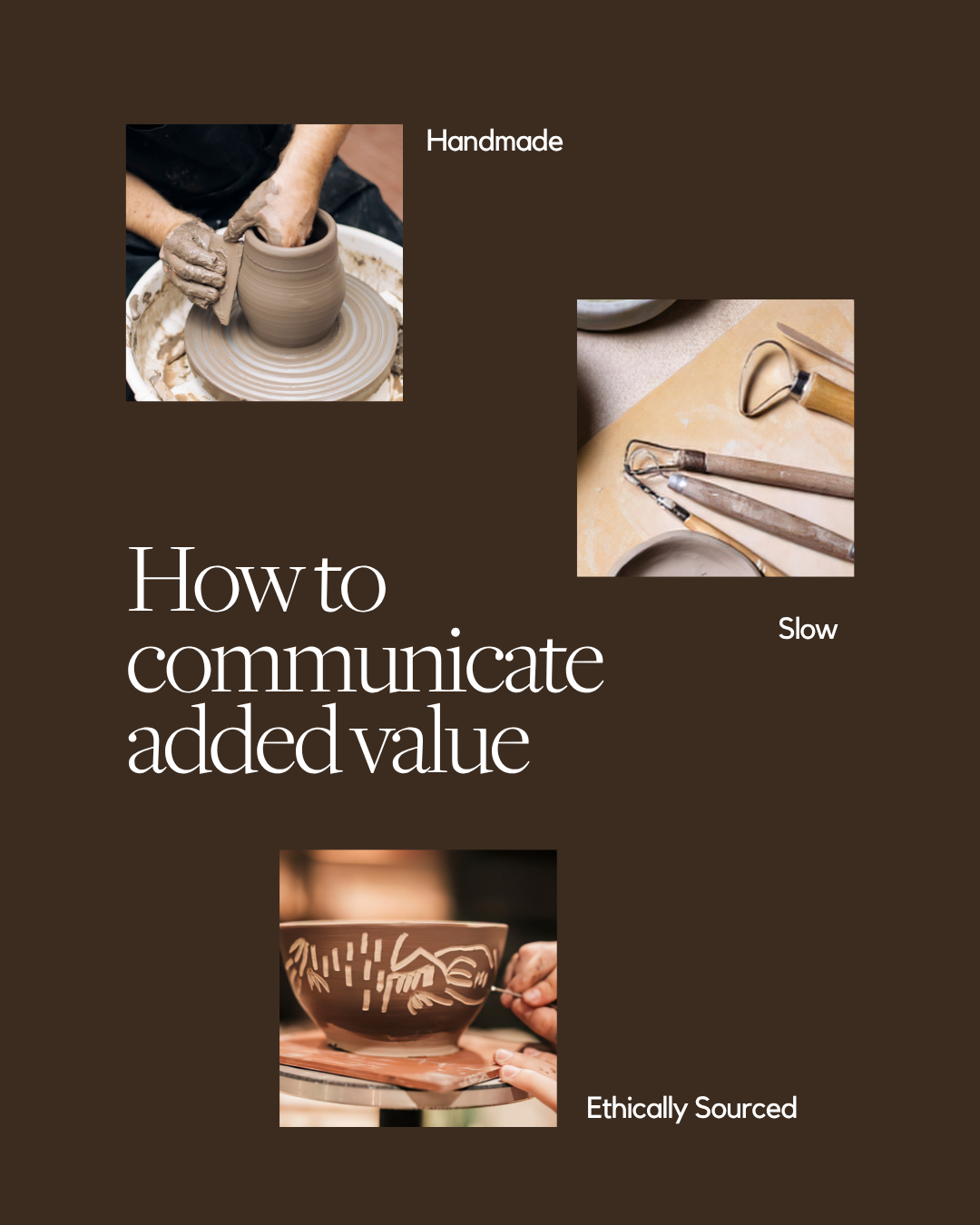
The challenge most maker businesses face is that what makes their work valuable is exactly what's hardest to communicate quickly. Handmade, ethically sourced, slow-produced, designed with intention, these things require context to land. Without that context, the product looks expensive. With the right context, it looks like the only logical choice.
Brand strategy for a maker business is largely the work of building that context, systematically and consistently, across every touchpoint.
1. The messaging is written from the inside out
This is the most common one. The copy describes what the founder is proud of about their business — the process, the craft, the values, the journey. All of which are genuinely important. But they're framed for someone who already cares, rather than for someone who is arriving as a stranger and asking, subconsciously: is this for me? Can I trust this? What happens if I buy?
Messaging that lands is written from the customer's perspective first. It meets them where they are, describes their situation accurately, and only then introduces the solution. The founder's story is still there — it just doesn't lead.
2. The offer isn't clear enough
Clarity about the offer is one of the hardest things to achieve when you're close to your own work, because to you, it's obvious. You know exactly what you do and how it works.
But a new visitor reading your website for the first time, probably on their phone, probably skimming — they're working much harder to understand. If it takes more than a few seconds to grasp what you offer and who it's for, most people will leave without ever engaging with the parts of your site that would have convinced them.
The fix is almost never adding more explanation. It's usually removing the things that obscure the clear, simple answer.
3. The brand feels inconsistent across touchpoints
Your Instagram feels one way. Your website feels another. Your email sounds different again. Each individually might be fine. Together, they don't build a coherent impression.
Consistency isn't about using the same adjectives everywhere. It's about having a stable underlying position, a clear point of view about who you serve and why, that comes through regardless of the format.
When that's there, everything starts to feel cohesive. When it isn't, things feel patchy in ways that are hard to diagnose but easy to feel.
What to do about it
The starting point is almost always stepping back from the individual pieces: the website, the Instagram, the email, and looking at the whole thing as a new visitor would. What does this brand communicate in the first fifteen seconds? What does it leave unclear? What would make someone stay?